
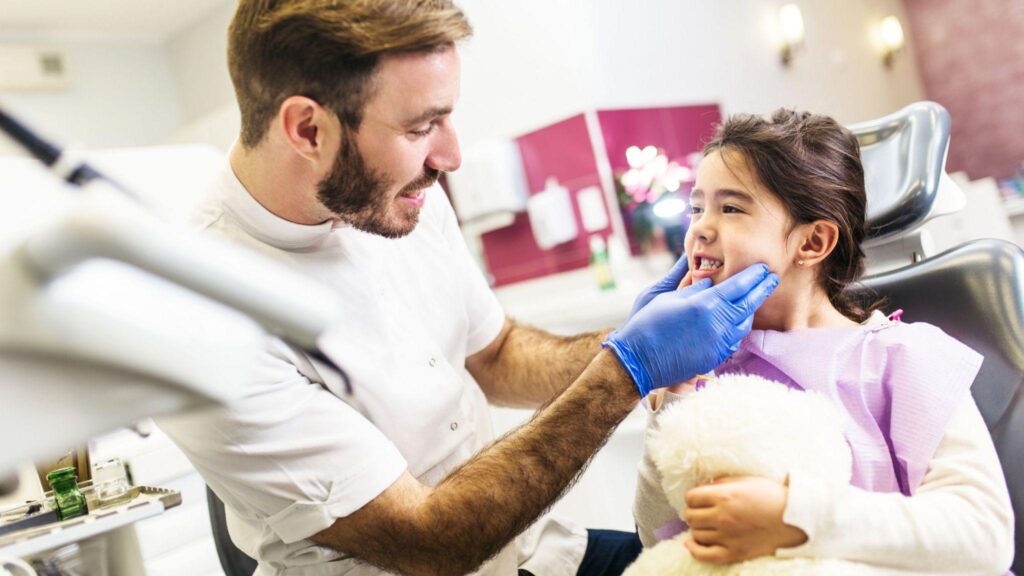
Schedule your child’s first dental visit by their first birthday, or within six months after the first tooth appears. The appointment gives you a chance to get guidance for your child’s current needs and start regular dental care while their teeth are developing.
Even a baby with only a few teeth benefits from an early checkup. Finding a dentist who sees infants gives your family a place to turn with questions about brushing, feeding, teething, and oral development. If your family already visits a practice such as Florida Dental Implant Center, ask whether it sees young children or can recommend a pediatric dentist.
When Should You Schedule the First Visit?
Your child should see a dentist by age 1, or within six months of the first tooth erupting. That timing gives the dental team an early look at your child’s mouth and lets you begin preventive care before a problem causes discomfort.
What Do the AAPD and ADA Recommend?
The American Academy of Pediatric Dentistry (AAPD) recommends a first dental visit by the first birthday or within six months after the first tooth comes in. The American Dental Association (ADA) also supports an early first visit around the time teeth appear, with age 1 as the latest target.
If your child’s first birthday has passed, schedule an appointment as soon as you can. Your family dentist may see infants, or you can ask for a referral to a pediatric dentist.
Why Not Wait for a Toothache?
A dental visit before symptoms appear gives your dentist a chance to spot early signs of decay and assess your child’s risk. Tooth decay can develop in baby teeth, and untreated decay can lead to pain or infection.
At the appointment, you can ask how to clean your child’s teeth and gums, how feeding habits affect teeth, and what changes to watch for. If you see white or brown spots, swelling, or signs of pain, contact a dentist promptly.
Why Does an Early Dental Home Matter?
An early dental home gives you an ongoing relationship with a dental team that can provide preventive care and guidance as your child grows. Regular visits also help the team track changes in your child’s teeth, bite, and oral health over time.
How Can Early Visits Help Prevent Tooth Decay?
Early visits help you learn daily habits that lower your child’s risk of tooth decay. Your dentist can review brushing, feeding routines, fluoride use, and your child’s individual risk factors.
Once the first tooth appears, brush twice a day with a soft, child-sized toothbrush and a smear of fluoride toothpaste about the size of a grain of rice. Ask your dentist how to manage bottles and cups, especially around sleep, and whether fluoride varnish is appropriate for your child.
Can a Positive First Visit Reduce Dental Anxiety?
A calm first appointment can help your child become familiar with the dental office and its routines. Gentle introductions, a brief exam, and a caregiver close by can make the setting feel more predictable.
Your child’s response will depend on age, temperament, and how they feel that day. Keeping the visit relaxed and following the dental team’s pace helps your child build familiarity over repeated checkups.
What Can the Dentist Check About Growth and Bite?
Your dentist can check how your child’s teeth and jaws are developing and look for concerns that need monitoring. The exam may include the gums, oral tissues, tooth eruption, bite, and habits such as pacifier use or thumb-sucking.
You can ask when to expect additional teeth and whether your child’s bite or oral habits need follow-up. If the dentist sees a concern, they can explain the next steps or recommend an evaluation.
What Happens During an Age-One Appointment?
An age-one appointment is a brief, age-appropriate checkup that focuses on your child’s mouth and your questions. Your dentist will adapt the exam to your child’s comfort and development.
What Does the Exam Include?
The dentist checks your child’s teeth, gums, and other oral tissues, and looks for early signs of decay or developmental concerns. You may be asked about medical history, feeding, brushing, fluoride exposure, and habits that affect the mouth.
Some appointments include a gentle cleaning or fluoride varnish, depending on your child’s needs and the dentist’s assessment. X-rays are considered when the dentist determines they are needed for diagnosis or care.
What Guidance Can Parents Expect?
You can expect practical advice for caring for your child’s teeth at home. Your dentist can show you how much fluoride toothpaste to use, discuss brushing technique, and answer questions about teething, snacks, drinks, pacifiers, and thumb-sucking.
Bring up anything you have noticed, such as a change in tooth color, difficulty brushing, or questions about nighttime bottles. Your dentist can tailor recommendations to your child’s health history and routine.
How Can You Help Your Baby Feel Comfortable?
Choose an appointment time when your child is rested and fed, and bring a familiar comfort item if the office allows it. A calm tone and an unhurried arrival can help you settle your baby before the exam begins.
You can hold your child during the visit or follow the team’s instructions for positioning. If your baby cries or needs a break, tell the dentist; the team can adjust the pace and help you continue when your child is ready.
A Calm Start Supports Lifelong Dental Care
Starting dental visits by age 1 gives you timely guidance and helps your child grow familiar with preventive care. Schedule the first appointment by the first birthday, or within six months of the first tooth, and bring your questions about brushing, feeding, and development.