
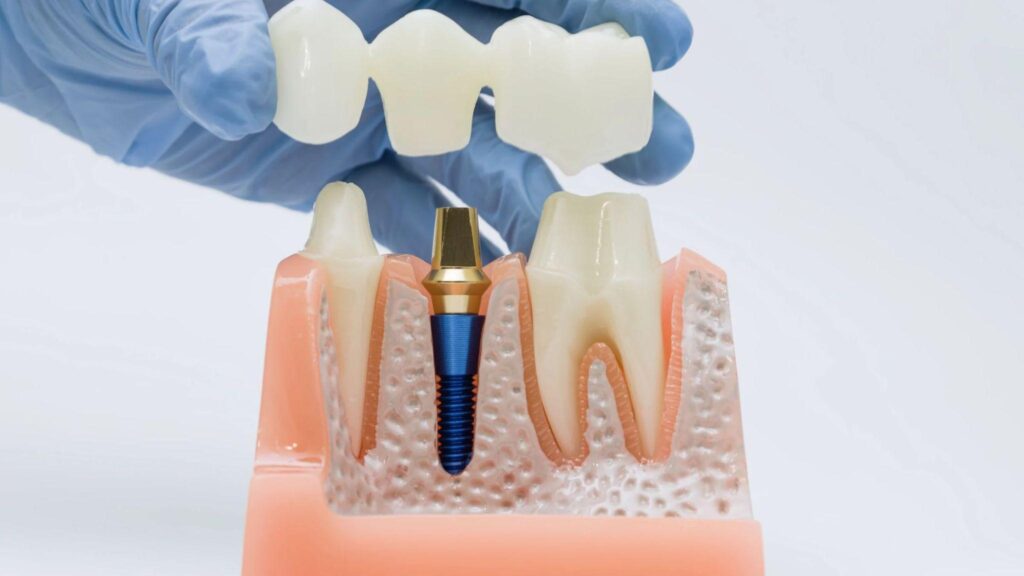
A full crown is commonly recommended after a root canal on a back tooth because it covers cusps exposed to chewing forces; a front tooth with substantial healthy structure may need only a filling. If you’re comparing fillings and dental crowns in Easton, PA, your dentist’s recommendation reflects how much sound tooth remains and how the tooth functions.
The root canal treats tissue inside the tooth. Your final restoration seals the access opening and supports the remaining structure, helping you keep the tooth functional.
When Is a Full Crown Recommended?
A full crown is most useful when your treated tooth must withstand heavy chewing or has lost substantial structure. Your tooth’s location, remaining walls, and any cracks help your dentist judge how much coverage it needs.
Why Back Teeth Often Need More Protection
Your molars and premolars take substantial pressure when you chew. A crown covers the tooth and helps protect its remaining cusps from splitting under that load.
A back tooth with a large cavity or a wide root canal access opening has less structure to resist chewing forces. If decay or treatment has removed a large portion of the tooth, your dentist may recommend a crown to restore its shape and provide coverage.
How Remaining Tooth Structure and Cracks Affect the Decision
The amount and condition of your remaining tooth structure guide the recommendation. A tooth with several strong walls may support a more conservative restoration, while a tooth with extensive decay, missing cusps, or thin walls may need full coverage.
Cracks also influence the plan. A crack that extends into a chewing surface can spread under pressure, so your dentist will assess its location and depth before choosing a restoration. Ask which walls and cusps remain intact, and whether a crack changes the tooth’s risk of breaking.
Can a Filling Be Enough Instead?
A filling can be enough when your tooth retains strong structure and the restoration can seal the access opening securely. Your tooth’s position and chewing load help determine whether a filling offers suitable support.
When a Front Tooth May Not Need a Full Crown
Your front tooth may need only a filling when the root canal access required little removal and the surrounding enamel and edges remain intact. Front teeth generally handle less direct grinding force than molars, which can make a bonded filling suitable for a carefully selected tooth.
A filling also preserves more of your natural tooth. If the tooth has a large cavity, a visible crack, or significant damage from an earlier restoration, your dentist may recommend broader coverage even for a front tooth.
How Dentists Compare a Filling With a Crown
Your dentist compares how much healthy tooth remains, the size of the access opening, and the forces your bite places on the tooth. A filling bonds to the remaining structure and works well when that structure can support it; a crown covers more of the tooth and protects weakened cusps.
Your dentist may also consider how the restoration will meet neighboring teeth and fit your bite. Ask how each option affects the amount of tooth preserved, the coverage provided, and the likelihood that the restoration will need repair.
Why Timing Matters After Root Canal Treatment
Prompt placement of your permanent restoration helps protect the tooth while you return to normal chewing. Follow your dentist’s schedule, especially if the tooth is awaiting a crown.
What to Expect Before the Permanent Restoration
Your dentist may place a temporary filling after the root canal while the permanent restoration is prepared. For a crown, the next steps may include shaping the tooth, taking a scan or impression, and placing a temporary crown until the final one is ready.
The timing depends on your treatment plan and the tooth’s condition. Keep the appointment your dentist recommends, and contact the office if the temporary restoration loosens or comes out.
How to Protect the Tooth While You Wait
Chew on the opposite side when practical, and choose softer foods until your dentist places the permanent restoration. Avoid biting hard or sticky foods with the treated tooth, since a temporary filling offers less coverage than a finished crown.
Keep brushing and flossing around the tooth gently. Contact your dentist if your bite feels uneven, the temporary restoration breaks, or pain or swelling worsens.
The Best Restoration Depends on the Tooth’s Condition
Your dentist’s recommendation should reflect the tooth’s remaining structure, location, and bite forces. A back tooth with weakened cusps often needs a crown, while a front tooth with strong surrounding structure may be restored with a filling.
Ask your dentist to show you the remaining tooth structure and explain how the proposed restoration protects it. That conversation can clarify why a crown or filling fits your tooth’s condition.