
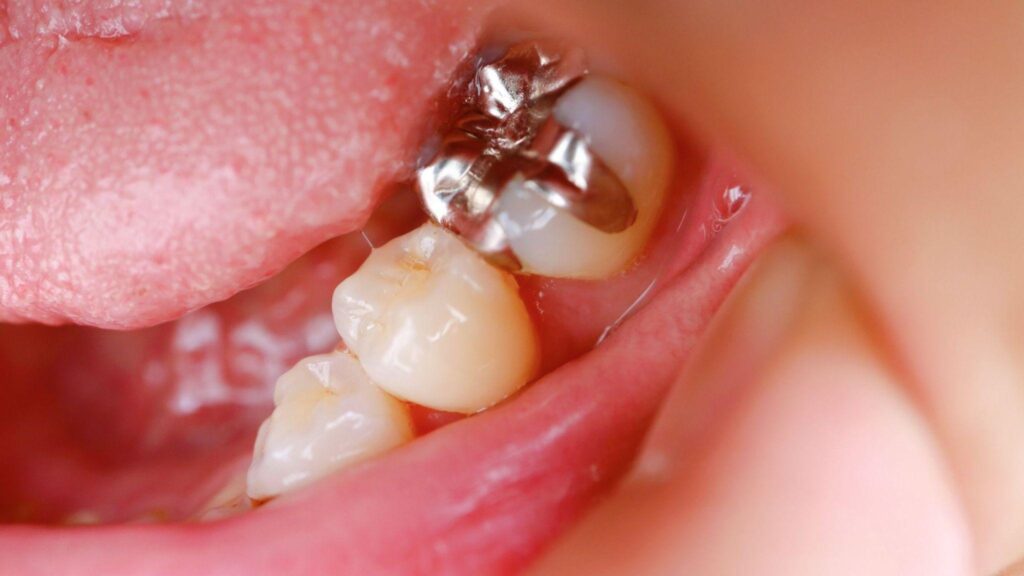
An intact silver filling can remain in place: phaseout policies focus on future use, while replacement depends on the condition of your filling and the tooth around it. In the U.S., you are not required to remove a functioning amalgam filling because of global phaseout plans.
Dental amalgam contains mercury along with metals such as silver, tin, and copper. Its use is changing for environmental and policy reasons, yet your existing filling calls for attention only if an exam finds a problem or your health circumstances warrant a discussion with your dentist. If the tooth around a failing filling cannot be saved, a specialist practice such as Inland Institute Oral & Maxillofacial Surgery can handle the extraction.
What Is Changing in Dental Amalgam Use?
In the U.S., dental amalgam remains available, and no nationwide rule requires you to remove existing fillings. International phaseout plans are changing how countries manage future use, with implementation dates and exceptions set by local policy.
What Does the Global Phaseout Mean?
Countries participating in the Minamata Convention agreed to phase out dental amalgam by 2034, with limited exemptions. The effort aims to reduce mercury pollution from production, use, and disposal. The agreement does not create one universal rule for every country, so the effect on new fillings depends on local regulations.
In the U.S., amalgam remains permitted. The FDA advises extra caution about new amalgam fillings for certain groups, including pregnant people, young children, and people with particular health conditions. If one of these categories applies to you, ask your dentist to discuss suitable materials before treatment.
Will Existing Silver Fillings Be Removed?
Your existing silver filling does not need to be removed solely because countries are phasing out new amalgam use. There is no U.S. federal recall or general removal requirement for fillings that remain functional.
If your filling is sound, your dentist can monitor it during routine exams. If you want to replace it for appearance or personal preference, ask about the benefits, risks, cost, and amount of tooth structure that removal would involve.
Can You Keep an Intact Silver Filling?
You can keep an intact, comfortable silver filling when your dentist finds no decay or damage in the filling or surrounding tooth. Regular dental exams help identify changes that are difficult to spot at home.
What Does the Evidence Say About Safety?
Dental amalgam releases small amounts of mercury vapor, with higher exposure possible during placement or removal. The FDA considers amalgam safe for most people, while recommending that certain groups avoid new amalgam fillings when suitable alternatives are available.
If you have a medical condition or concern about mercury exposure, tell your dentist and discuss your options. Your dentist can consider your health history alongside the filling’s condition and the treatment needed.
Why Can Removing a Sound Filling Cause Harm?
Removing a sound filling requires drilling, which also removes some tooth structure and can temporarily increase exposure to mercury vapor and particles. The procedure can weaken the tooth and lead to a larger restoration if the remaining structure cannot support a filling.
When removal is clinically necessary, your dentist can use protective measures such as water cooling and high-volume suction. Ask why replacement is recommended and what the procedure would involve before deciding.
When Should a Silver Filling Be Replaced?
A silver filling should be replaced when an exam shows a problem such as decay beneath it, a fracture, or a damaged edge. Your dentist may use an exam and dental X-rays to assess the filling and the tooth around it.
What Signs Call for a Dental Checkup?
Book a dental checkup if you notice pain when biting, lingering sensitivity to hot or cold, a chipped filling, or a rough or broken edge. Food repeatedly catching near the filling can also signal a change worth checking.
These symptoms do not confirm that the filling has failed, and some problems develop without noticeable symptoms. Your dentist can check for decay, cracks, and changes at the filling’s margins; avoid chewing hard foods on a tooth that hurts until you have advice.
What Filling Materials Can Replace Amalgam?
Tooth-colored composite resin is used for many small and moderate restorations. It bonds to the tooth and blends with its shade, while the result depends on the size and location of the repair and the dentist’s ability to keep the area dry during placement.
For a larger repair, your dentist may discuss an indirect restoration such as a ceramic or gold inlay, onlay, or crown. Glass ionomer is another option for selected situations, though it has different strength and wear characteristics. Ask how each option fits your tooth, expected chewing forces, appearance preferences, and budget.
Let Your Dentist Guide the Next Step
Your dentist can determine whether your silver filling needs treatment by checking its edges, the surrounding tooth, and any symptoms you report. A sound filling can remain under routine monitoring, while damage or decay calls for a plan tailored to the tooth.
At your next visit, ask whether the filling is intact, whether an X-ray shows decay, and what the risks and costs of replacement would be. If replacement is recommended, ask which material suits the repair and how much healthy tooth structure the procedure will preserve.