
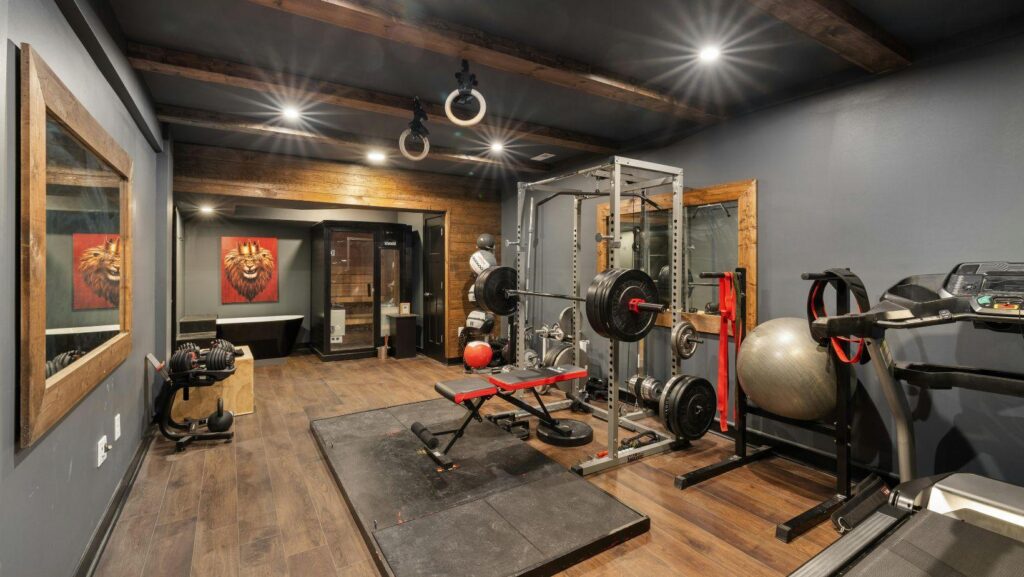
The bench becomes a laundry surface. That’s not a possibility, that’s the destiny-the default ending for roughly nine out of ten home gyms, a statistic invented just now but spiritually accurate. Somewhere right now, in thousands of spare rooms, adjustable dumbbells are holding up a stack of folded towels. The towels are clean. Nobody has lifted anything in months.
And here’s what makes it sting: the failure almost never starts with laziness. It starts with a purchase order. The gym was built wrong-bought in one motivation-drunk weekend, optimized for a fantasy version of a person instead of the actual person who has to work out in it on a Tuesday in February.
The fix isn’t more discipline. It’s a budget with rules: start with equipment you’ll use, leave room for upgrades, and keep other financial goals-whether you want to book a holiday or buy Litecoin-in their own budget categories. Give each goal its place, and the gym can grow with your habits instead of racing ahead of them. Hype is undefeated against willpower and surprisingly bad against spreadsheets.
Before anything: what is this thing for
“Get in shape” is not a goal. It’s a mood, and moods don’t generate shopping lists. Strength training wants loadable resistance and stable positions. Fat loss wants whatever makes consistency easiest – which is often embarrassingly simple, a fact the fitness industry has spent billions obscuring. Mobility and rehab want floor comfort and light tools.
Pick one primary outcome, one secondary. That’s it. The list exists for exactly one moment: the day a flashy deal appears that matches neither. Without the list, that plyo box is coming home, and the plyo box will become a chair. They always become chairs. The plyo-box-to-chair pipeline is one of the most reliable conversions in consumer fitness.
Then the household audit everyone skips and then regrets skipping. Apartment: quiet and pack-away. Garage: weatherproofing and lighting, because nobody trains in the dark next to a frozen lawn mower, or they do, once. Kids and pets mean loose plates and bands need an actual home. A guy on a forum once posted a photo of his toddler standing triumphantly on a 25-pound plate like it was a podium. Cute photo. The plate had been “temporarily” on the floor for four months.
Two lists, written before a single price gets compared. Non-negotiables: safety, floor protection, ceiling clearance overhead, room to bail from a lift without clipping furniture. Nice-to-haves: mirrors, specialty attachments, anything chrome. The second list is where budgets go to be murdered, and the murder weapon is always chrome.
The budget: three buckets and a fence
Yes, buckets again. They work. Foundation, Progression, Comfort.
Foundation is the safe basics that enable most workouts most weeks. Not the dream gym – the functional one, the one that gets used by the person who actually lives in the house. Progression is spending that breaks a real ceiling: heavier plates, a pull option that isn’t a doorframe and a prayer, a bench that doesn’t wobble like a folding table at a yard sale. Comfort is storage, nicer handles, speakers. Comfort is lovely. Comfort is also where money goes to become décor, which is why it gets capped hardest and unlocked last. More on that later. It’s important enough to threaten twice.
Don’t set one big number. Set a starting range for the foundation plus a small monthly upgrade allowance – a sinking fund, in the budgeting parlance, which makes it sound boring and is therefore perfect. When the next upgrade window is already on the calendar, random purchases lose their urgency. “Wait for the window” is a complete sentence. It has saved more money than any coupon code ever written.
Plus a small contingency line, because something will arrive missing a bolt, or require a tool the instructions assumed everyone owns (nobody owns it), or need one more mat than measured. Boring money. Boring money is load-bearing in its own way.
Measure like the tape measure owes money
Room size is a liar. Usable training area is the truth: ceiling height, overhead clearance, door swing, walking paths. And the one nobody measures until it matters – bail space. Where does the weight go when the lift goes wrong? Because lifts go wrong. Not often. Often enough that “where do I dump this” deserves an answer before the question arrives at 6 a.m. with 135 pounds attached.
Storage gets decided before equipment arrives, not after. Wall hooks, vertical racks, pack-away options – storage shrinks a footprint more than any compact all-in-one machine, and costs a tenth as much. Without a plan, equipment spreads. The room gets “busy.” Busy rooms quietly discourage use, and clutter is a rep scheme nobody programmed but everybody’s running.
Flooring goes early. Rubber mats: protect the floor, improve footing, muffle the thud. That last one sounds optional until the first time a deadlift sets off a household incident report. A gym that generates complaints becomes a gym that generates avoidance, and there’s no drama in that sentence – it’s just how households vote.
The minimum viable gym (smaller than the fear says)
Push, pull, squat, hinge. Adjustable dumbbells or a small set. A stable bench. Bands. A pull option – doorway bar, band anchor, anything honest. That’s the list. That’s genuinely enough for a startling amount of training, and everyone who owns a garage full of gear knows it, which is why they don’t make eye contact when it comes up.
Cardio: pick ONE lane. One. Jump rope – tiny, effective, loud. Walking – free, sustainable, weather-permitting. Bike or rower – footprint, money, reliability. Treadmill – great workout, maintenance-hungry, and the single most resold object in the fitness classifieds, where it is always described as “barely used” and always telling the truth.
Mobility is nearly free and nobody budgets for it: mat, foam roller, lacrosse ball, ten minutes after sessions. Soreness stops being a reason to skip. The cheapest bucket with the best return. Naturally, it’s the one that gets deferred until someone’s back files a complaint.
Serious money goes to exactly one place
Load-bearing equipment. If heavy compounds are the plan, then the rack or stand with real safeties, a solid bar, plates, and a planted bench get the grown-up budget. Wobble under load is not a “later problem.” It’s a now problem wearing a later costume, and the costume is not convincing.
Quality signals beat marketing copy every time: wide base, honest weight ratings, hardware that tightens and stays tight. A bench should feel planted, not optimistic. Adjustable dumbbells should lock with a sound that inspires confidence, not a sound that inspires prayer. These signals exist to prevent the upgrade-by-frustration cycle – buy cheap, hate it, replace it, spend more across two purchases than the good one cost. Buy nice once. It’s the only discount that compounds.
Shared households get short rules: plates stored in the same place every time, small stuff away from the toddler podium, always re-rack, never leave the bar loaded. The rules protect the habit more than the floor. A gym that stays tidy stays used. There’s probably a study. There doesn’t need to be.
Upgrades get earned, or they don’t happen
Triggers get set before browsing, because browsing is where triggers go to die. Good triggers: twelve weeks of consistent training. A genuine ceiling – weights maxed, and the workout keeps bending around the limitation like water around a rock. The workaround is the tell. When a routine has grown three substitute exercises to avoid admitting the dumbbells are too light, the dumbbells are too light.
Priority order: load range first, exercise menu second, convenience last. Plates before pull stations, pull stations before mirrors. The mirror does not make the dumbbells heavier. This has been tested. Disappointing results.
And comfort unlocks after adherence – the threatened return of the point from earlier. Prove the habit, then improve the experience. The other order produces expensive décor, which brings everything full circle to the laundry bench. It always comes back to the laundry bench. The bench is the final boss of this entire article and it was defeated in the first paragraph. That’s not how boss fights work, and yet.
Used, new, and the bundle question
Used equipment stretches a budget like nothing else, with inspection attached. Cracks, bent frames, stripped holes, loose welds, wobble. Moving parts should move like moving parts. Benches: stable, pads intact, bolts tight. Count the little parts – collars, pins, hardware – because “little parts” is a phrase that has eaten many budgets in small bites. And price the transport honestly. A cheap listing plus a rented truck plus a friend’s Saturday plus that friend’s lower back is not a cheap listing anymore. Simple designs age best, resell best, and break least. Complexity is where used deals become cautionary tales with a motor.
Which is the entire argument for buying new in one category: complicated machines. Treadmills, screen-rowers, anything with a motor or a motherboard. Warranty and a return policy aren’t luxuries there – they’re the product. Buy simple things used, buy complicated things returnable. That’s the whole heuristic. It fits on an index card, which is where it belongs.
Bundles earn their keep when the set matches the plan, fits the room, and stays upgradeable. A good bundle kills decision fatigue. A bad bundle is clutter with a bulk discount.
The sticker price is a rumor
Total cost of ownership: delivery, assembly, maintenance, parts, electricity, mats, mounts, hooks. When those are visible, “surprise” spending stops being surprising, because it turns out it came from a very identifiable somewhere all along.
Then cost-per-use, the single most clarifying question in the whole project. Used weekly? A higher price is rational – it smears across hundreds of sessions into pocket change. Used “sometimes”? Rent it, borrow it, skip it. If an item won’t change how often or how well training happens, it isn’t an upgrade. It’s a purchase wearing an upgrade’s costume. (Third costume. That’s the ration. No more costumes.)
The traps, at speed
Motivation-spike shopping. The cart gets filled during a peak-motivation week, which is like grocery shopping hungry except the groceries cost $2,000 and need assembly. Foundation first, train a few weeks, upgrade on evidence. Motivation is a spark. Sparks are terrible strategists.
Specialty tools before the basics earn them. The trap bar, the bamboo bar, the bar that looks like a medieval farming implement – all arriving before anyone’s done a consistent month of the boring patterns. Squats, hinges, presses, rows. Delay specialty until there’s a training reason. Curiosity is not a training reason, though it is an extremely persuasive salesperson with excellent product photos.
Underbudgeting the unsexy. Flooring, storage, setup. Skip them and the result is noise, clutter, and equipment that’s technically owned and spiritually avoided. They aren’t extras. They’re the difference between a gym and a pile.
The plan
First 30 days:
- Week 1: goals, measurements, bail routes, storage and flooring decisions
- Week 2: foundation only. Set up safe and accessible. Resist everything else with both hands.
- Week 3: train, track what gets used and what gets skipped
- Week 4: one progression decision, from the data. Ceiling proven? Plan the upgrade. Otherwise hold the money and keep going. Holding is a move.
Before any purchase:
- Fits the plan? Fits the space, safely? Gets used weekly?
- Cheaper substitute exist?
- Total cost of ownership – actually added up, not vibes?
- Fuzzy on anything? Wait for the window. The window exists for this exact moment. This exact one.
The part nobody photographs
The gyms that last aren’t impressive. That’s the secret nobody wants. They’re modest rooms where the spending followed evidence, the safety money went to the load-bearing stuff, and every upgrade showed up after the habit proved it would get used. The equipment is unremarkable. The usage is relentless.
The real flex isn’t the rack. It’s a Tuesday in month fourteen – unphotographed, unremarkable, the workout just happening, in a room that cost less than the couch. The hype never stood a chance. The hype was never going to. Hype quits by March; the budget with rules is still there in February, in the cold, doing reps.